Yesterday, I spent the day sewing up
McCall's 4872.
This was my first attempt at making a garment using knit fabric, and I'm very pleased with the results.
For this first try, I worked up a muslin using a cheap ($1/yard) knit from WalMart. I think it might be classified as a jersey knit, but I'm not 100% positive about that. The most noticable attribute of this fabric is that it is
very thin. Too thin to wear actually. My own attributes don't need that much daylight ;)
I made up view B with just a few changes.
First, I shortened it quite a few inches - maybe 5 or 6. Also, instead of making my normal big arms alteration, I used the XL sleeve on the L bodice. The shirt fit perfectly after these little changes.
I tried making a neck band with the same fabric, and I think it would have worked, except for the part about sewing in on the wrong side. Oooops! I save it by rolling it inside and topstitching it down.
I used my serger for most of the construction including serging the sleeve and shirt hems, turning them under, and topstitching them down. I did a fake coverstitch on the sleeves by running two rows of topstitches with my regular sewing machine (I would have used a double needle instead, but don't have one of those for knits).
(Sidebar explanations for my non-sewing, or beginner friends)
For the longeset time, I didn't know what a
coverstitch was. In case you're curious, I'll tell ya. First find a t-shirt. Look at the hem of the shirt or the sleeves. Chances are, you'll see two rows of stitching on the outstide, and squiggly threads on the inside. That's coverstitching. It takes a special machine, or a serger with a coverstitch option, to make those.
So what's a
serger? It's a special kind of sewing machine that overlocks and trims the seams at the same time. They've got an OK definition of it at
Answer.com. Take a look at the side seams on almost any average piece of purchased clothing, a.k.a RTW - Ready-To-Wear, and they will be serged.
(End of Sidebar)
Lastly, I deviated from the instructions by using a technique called "sewing it in flat" to put the sleeves in. Instead of sewing the sleeve seam together first (making a tube out of it),

and then sewing the sleeve to the bodice, you sew the sleeve cap (top) to the bodice and leave the sleeve seam unsewn. Then you treat the bodice and sleeve seams as one and sew them at the same time.
I really, really like this method of attaching a sleeve. My seam intersections come out so much better this way.
Like I said, this try is a muslin. I'm waiting on some fabric to be delivered to make up the "real thing".
In the meantime, I'm getting View D of
Simplicity 4076 ready for a muslin workup.
Whew! Busy weekend, but I had a blast!


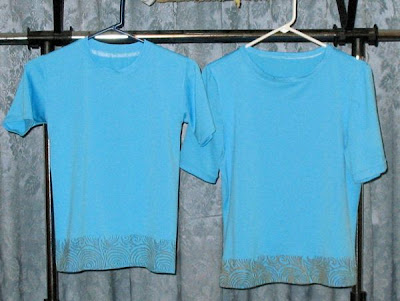


 The fabric I used is a stretch knit (97% rayon, 3% lycra) that I picked up from